What Is Torch Down Roofing? Everything NYC Property Owners Should Know
Walk down almost any block of row houses in Brooklyn, Queens, or the Bronx and look up at the parapet line — odds are very good you're looking at a torch-down roof. Torch-down roofing in NYC has been the workhorse flat-roof system on residential and small commercial buildings for more than 40 years, and despite the rise of TPO and EPDM, it's still one of the most installed membranes in the five boroughs. This guide explains what torch-down roofing actually is, how it's installed, what it costs, how long it lasts, and when it's the right call for your building.
What torch-down roofing actually is
Torch-down is the field nickname for SBS-modified bitumen, a flexible, multi-layer asphalt membrane manufactured in rolls. SBS (styrene-butadiene-styrene) is a rubber polymer mixed into the asphalt that makes the membrane stretchy and resilient — which matters enormously on a roof that goes through 30+ freeze-thaw cycles every NYC winter. The top sheet has either a smooth surface or a layer of mineral granules (similar to shingles) for UV protection.
Modified bitumen comes in two main install methods: heat-welded with a propane torch (the classic "torch-down"), or self-adhered with peel-and-stick backing. Both end up as the same membrane on the roof — the difference is how the seams bond. Most NYC residential and small commercial work is still done with the torch.
How torch-down is installed
A typical NYC torch-down install runs in four layers, bottom to top:
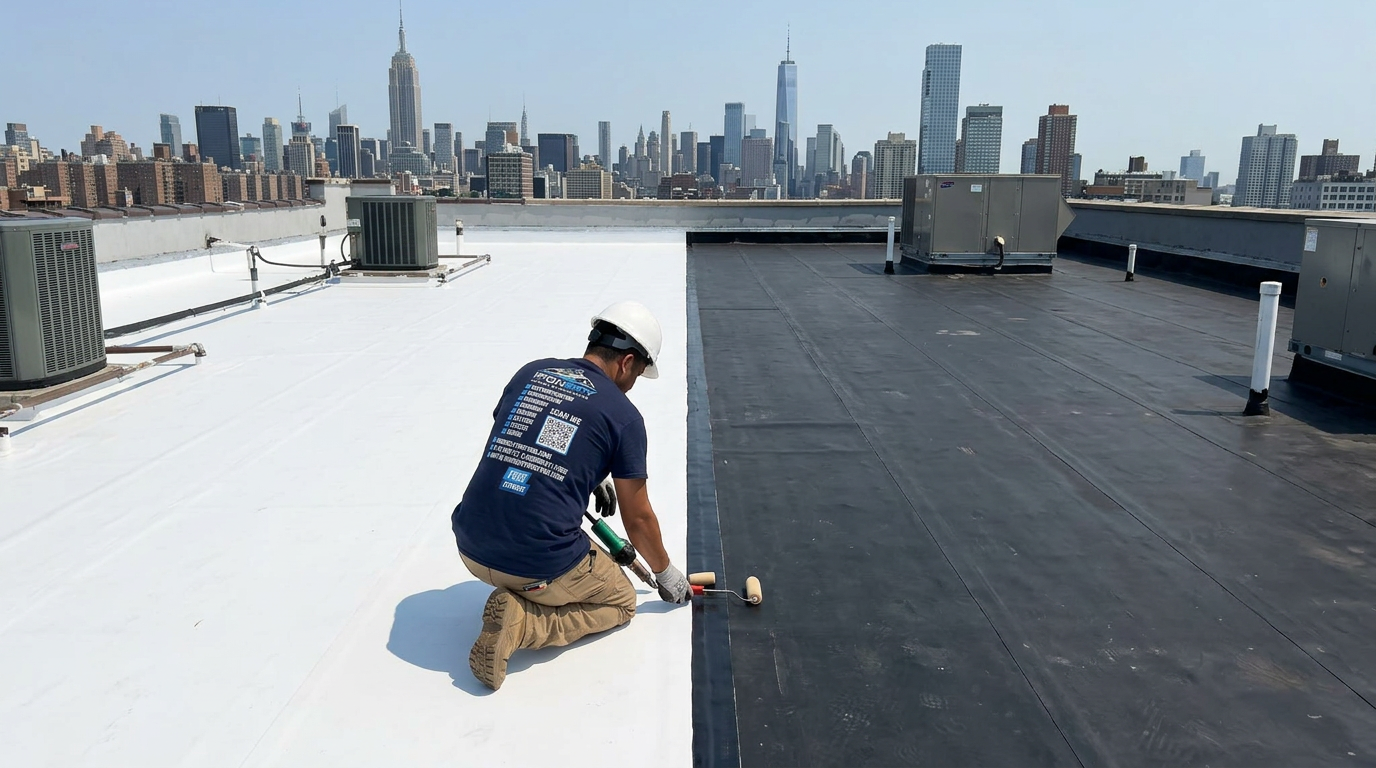
Crews work with a hand-held propane torch, melting the underside of each roll as they unroll it across the roof. Done correctly, you can see a thin bead of asphalt squeeze out at every seam — that's the visual sign of a fully welded lap. Done incorrectly, the seams are cold, the asphalt isn't activated, and the roof leaks within a couple of years.
Because of the open flame, NYC FDNY requires hot-work permits, fire watch, and fire extinguishers on site for every torch-down job. This is one reason rates have crept up — and one reason you should never hire anyone who proposes to torch a roof without a permit.
Pros of torch-down roofing in NYC
Cons of torch-down roofing
Lifespan and cost
Properly installed torch-down roofing in NYC typically lasts **20–30 years**. We regularly tear off 25-year-old mod-bit roofs that are still functional but at the end of their warranty.
Cost in 2025 for a typical 1,500–2,500 sq ft NYC roof:
Pricing scales with roof size, access difficulty, parapet condition, drain rebuilds, and tear-off scope. Manhattan jobs run higher because of sidewalk sheds, hoist time, and DOB filing complexity.
Which NYC buildings is torch-down best for?
TPO is usually the better pick for sun-baked rooftops, large multifamily with rooftop HVAC, or any owner chasing maximum cooling savings. EPDM is the better pick when shade and ultra-long lifespan matter more than upfront cost. Torch-down sits squarely in the middle and is still the right answer for a huge percentage of NYC buildings.
IronSky's experience with torch-down in NYC
Our crews have installed and repaired torch-down roofing on hundreds of NYC buildings — from three-family homes in Astoria and Bed-Stuy to mixed-use commercial in Long Island City. Every torch job we run carries the FDNY hot-work permit, on-site fire watch, fire extinguishers, and a final infrared scan to confirm every seam is welded. We pull the DOB permit, photograph every detail before and after, and back the work with a written workmanship warranty in addition to the manufacturer warranty.
Get a free torch-down estimate
If you're weighing torch-down roofing in NYC against TPO or EPDM — or if your existing mod-bit roof is showing its age — IronSky offers free, no-pressure flat roof consultations across all five boroughs. We'll walk the roof, photograph existing conditions, and email you a written, itemized quote you can compare line by line. Call (929) 994-0907 or request a free estimate online and we'll get on your roof, usually within 48 hours.
Get a Free Flat Roof Estimate
Licensed NYC roofers. Written, itemized quote. We respond within the hour during business hours.
- GAF Certified & Firestone Licensed
- Fully licensed & insured in NY State
- Free written estimate — no pressure
- Serving all 5 boroughs since 2008
Need a roofer in NYC?
IronSky offers free estimates and 24/7 emergency service across NYC, Long Island and Yonkers.
Get Free EstimateRelated Articles
All postsA side-by-side comparison of the two most popular flat roof systems in NYC.
TPO vs EPDM roofing in NYC: side-by-side pros, cons, costs, and the membrane IronSky recommends for brownstones, multifamily, and commercial buildings.
Flat roof replacement in NYC costs $8,000–$25,000+. Learn what affects pricing, TPO vs EPDM costs, and how to get the best quote from a licensed NYC roofer.