Paver Patio vs. Concrete Slab: Which Is Right for Your NYC Backyard?
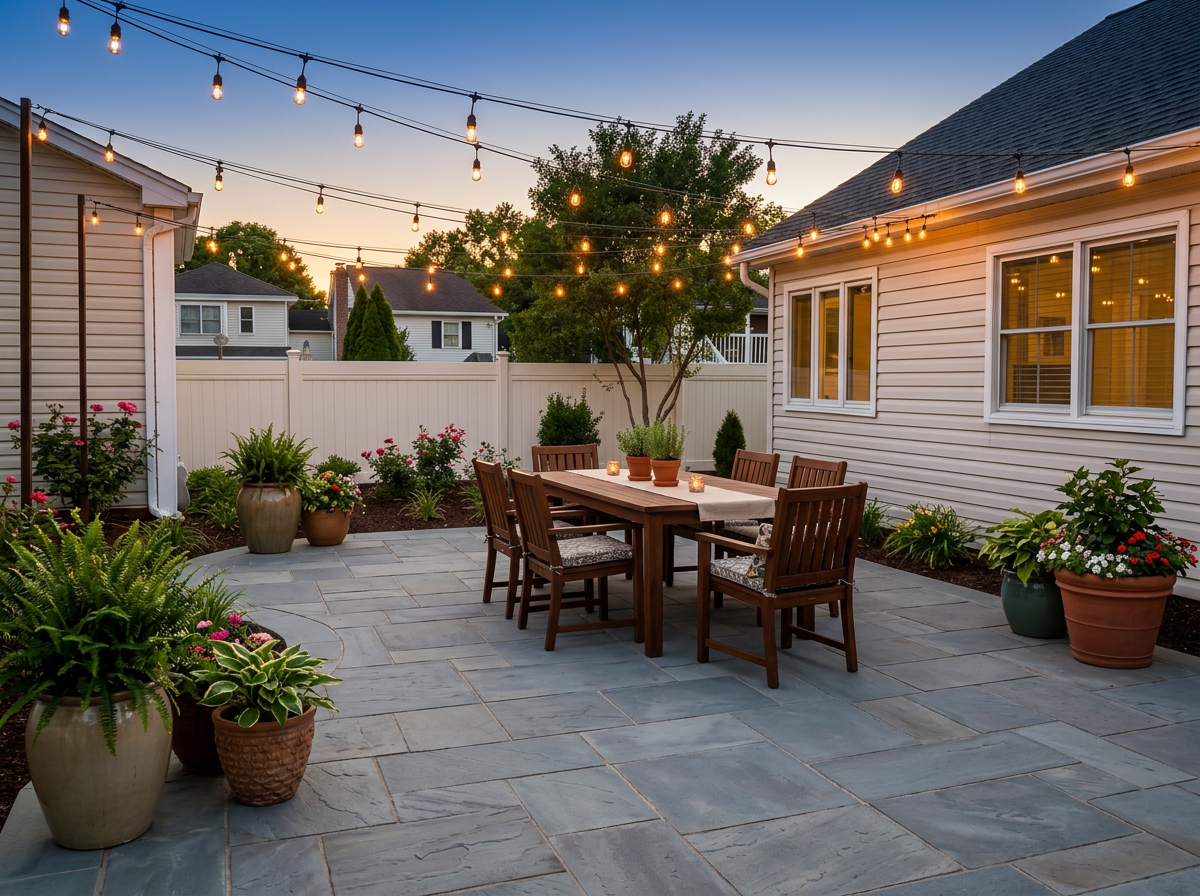
Almost every backyard hardscape conversation in NYC and Long Island starts the same way: 'I want a patio — should I do pavers or just pour concrete?' Both can look great, both will last decades when installed correctly, and both have legitimate use cases. But they behave very differently in NYC's freeze-thaw climate, and the wrong choice can cost you twice over the life of the patio.
After installing hundreds of patios across Queens, Brooklyn and Long Island, here's how we break it down for homeowners.
How a paver patio actually works
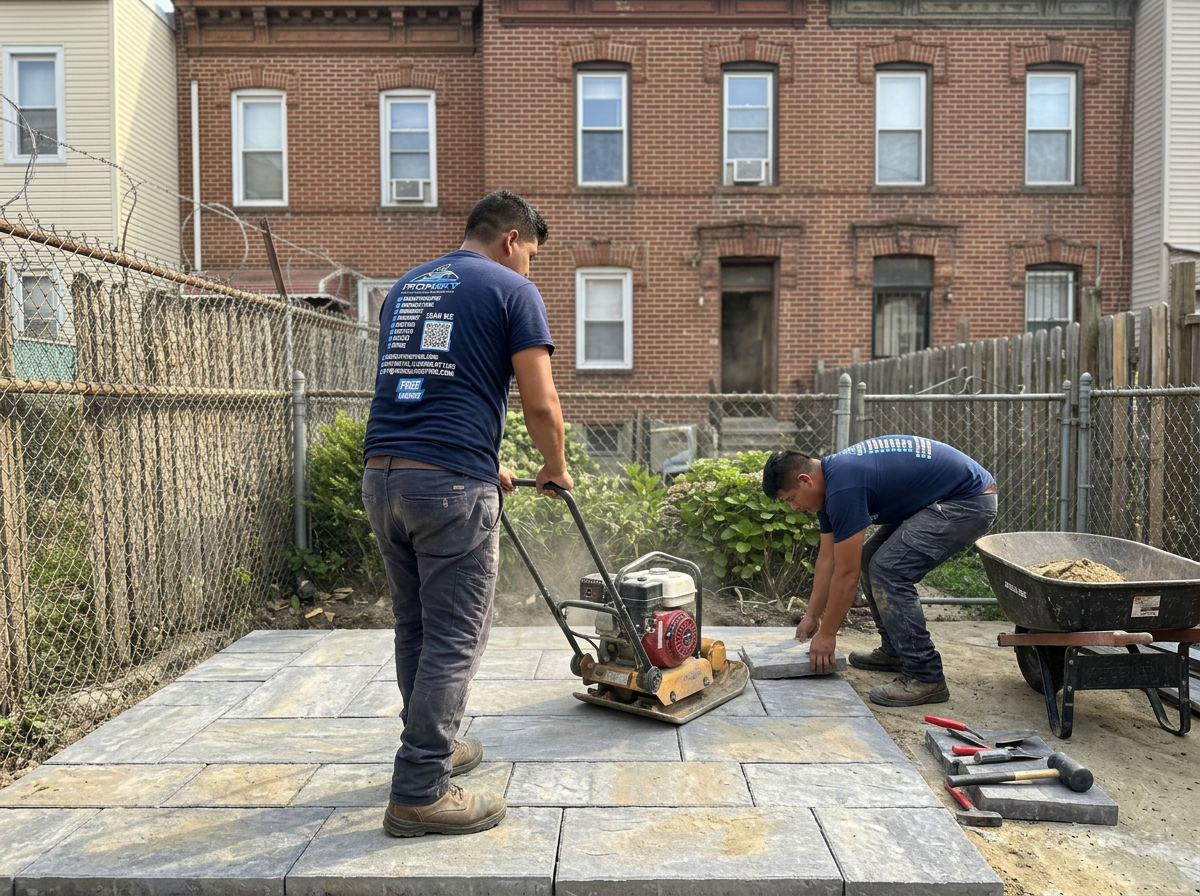
A proper paver patio is a layered system, not just stones on dirt. From the ground up: 6 inches of compacted gravel base, 1 inch of screeded bedding sand, the pavers themselves, and polymeric sand swept into the joints. The whole field floats on the gravel, which lets it move slightly with frost without cracking. That's the single biggest advantage of pavers in NYC — when the ground heaves, the patio heaves with it and settles back.
How a concrete slab works
A slab is a single piece of poured concrete, typically 4 inches thick over a compacted gravel base, reinforced with rebar or wire mesh, with control joints tooled in every 8–10 feet. The control joints are designed to give the slab a planned place to crack. When the ground moves under a slab, the slab moves as a unit — and if the movement exceeds what the slab can handle, it cracks at the control joints (good) or randomly (bad).
Lifespan in NYC's climate
A correctly installed concrete slab lasts 30+ years before showing serious wear. A correctly installed paver patio lasts indefinitely — individual pavers can be lifted and re-set, the base can be re-leveled, and the field can be expanded. We've worked on paver patios that were installed in the 1970s and still look great after a re-sand and re-level.
Repair and maintenance
This is where pavers really pull ahead. A cracked concrete slab basically can't be repaired invisibly — patches are obvious, and the underlying problem (frost heave, root pressure, poor base) usually returns. A sunken paver section can be lifted, the base re-compacted, and the same pavers reset in an afternoon. If you replace a single damaged paver from a leftover stock, the repair is invisible.
Concrete needs to be sealed every 3–5 years to prevent staining and freeze-thaw damage. Pavers need polymeric sand topped off every 5–7 years and a basic sealer if you want to lock in the color.
Cost comparison
Concrete is cheaper to install — typically $14–$22 per square foot in NYC. Pavers run $22–$38 per square foot installed, depending on the paver style. Over a 30-year horizon though, pavers usually pull even because the slab will need at least one major repair or replacement and the pavers won't.
When concrete makes more sense
Driveways with heavy daily vehicle loads, slabs that need to be perfectly level for furniture or tile, large simple rectangles where the cost difference matters, and projects where speed of install is the priority. A 400-square-foot concrete patio can be poured and finished in a single day; pavers take 2–3.
When pavers make more sense
Backyards over old fill or tree roots (where movement is guaranteed), curved or irregular shapes, areas that need to drain through the surface, and any project where the homeowner cares about being able to repair or modify the patio later. Brownstone backyards in particular almost always favor pavers because the soil is full of construction debris from the original build.
Our honest recommendation
For 80% of the residential backyards we work on in NYC, pavers are the right answer. The freeze-thaw forgiveness, repairability and design flexibility are worth the upfront premium. For 20% — usually large flat areas, driveway pads, or budget-constrained projects — concrete is the better fit. The wrong answer is almost always 'pour a slab and lay pavers on top of it'; that combines the cost of both with the durability of neither.
Get a Free Flat Roof Estimate
Licensed NYC roofers. Written, itemized quote. We respond within the hour during business hours.
- GAF Certified & Firestone Licensed
- Fully licensed & insured in NY State
- Free written estimate — no pressure
- Serving all 5 boroughs since 2008
Need a roofer in NYC?
IronSky offers free estimates and 24/7 emergency service across NYC, Long Island and Yonkers.
Get Free EstimateRelated Articles
All posts
Flat roof replacement in NYC costs $8,000–$25,000+. Learn what affects pricing, TPO vs EPDM costs, and how to get the best quote from a licensed NYC roofer.
From curling shingles to ceiling stains, here are the warning signs every NYC homeowner should know.
A side-by-side comparison of the two most popular flat roof systems in NYC.