10 Signs You Need a New Roof in NYC
Most NYC roofs are designed to last between 20 and 30 years, but the city is one of the harshest environments in the country for roofing materials. Brutal winters, intense summer UV, salt air near the coast, and back-to-back nor'easters all chip away at the lifespan of asphalt shingles, modified bitumen, and single-ply membranes alike. Knowing the warning signs early is the difference between a planned $15,000 replacement and a $40,000 emergency that includes ceilings, drywall, hardwood floors, and ruined belongings.
The good news is that roofs almost always tell you they're failing before they actually fail. The trick is knowing what to look for, both from the curb and from inside your attic. Below are the ten signs we see most often on NYC homes, in roughly the order they tend to appear. If you spot more than two or three of them on your own roof, it's time to schedule a professional inspection — preferably before the next big storm.
Before we dive into the list, a quick word about why NYC roofs fail differently than roofs anywhere else. Our temperature swings are extreme: a single February day can go from 22°F at sunrise to 48°F by mid-afternoon and back below freezing overnight. Every one of those swings expands and contracts every nail, shingle, flashing piece, and seam on the roof. Multiply that by 30+ freeze-thaw cycles a winter and you start to understand why a 20-year warranty in NYC is closer to a 15-year warranty in real life.
1. Curling, cupping, or clawing shingles
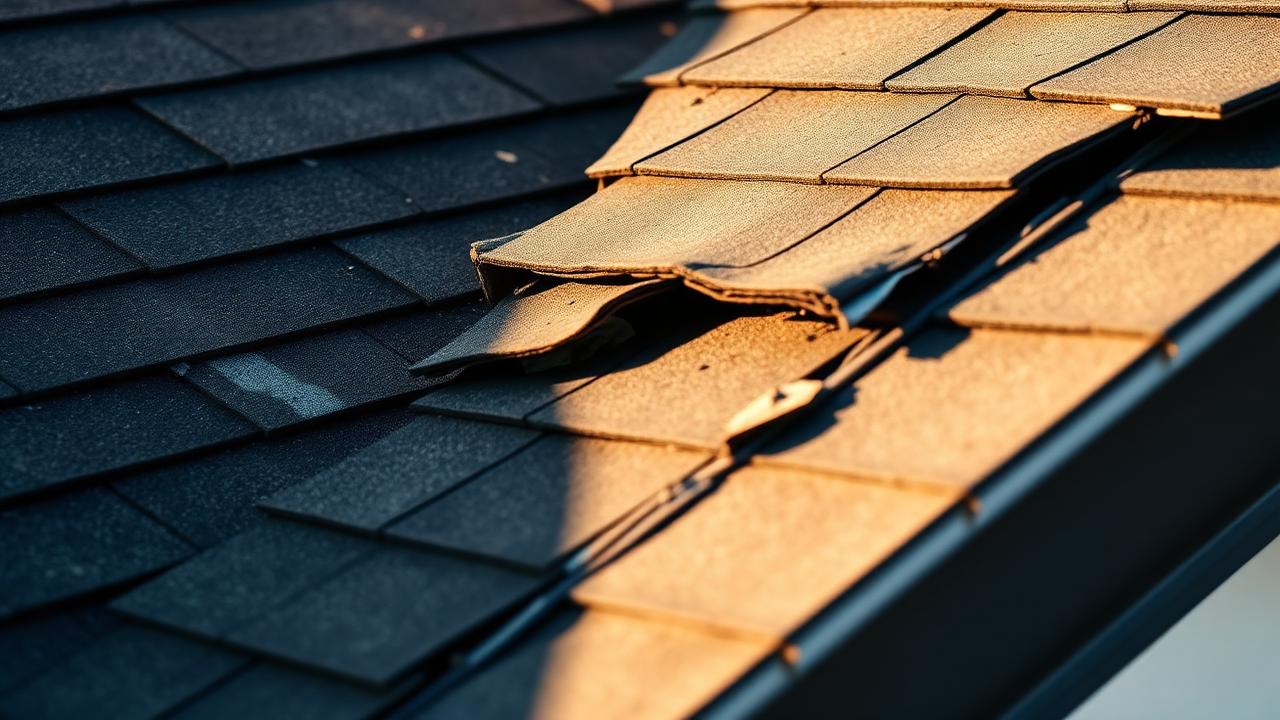
When asphalt shingles lose their flexibility, the edges begin to curl upward (cupping) or pull away from the deck (clawing). Once that happens, wind can lift them and rain can drive sideways underneath. A few isolated shingles can be replaced, but if you can see curling across an entire slope, the field of the roof is past its service life. The photo below shows what late-stage shingle failure looks like up close — once the underlayment is exposed, the roof has weeks or months left, not years.
2. Granules in your gutters and downspouts
Asphalt shingles are coated with mineral granules that protect the asphalt from UV. As the roof ages, those granules wash off and collect in the gutters. A handful is normal after a new install. Cups full of granules every time you clean — especially with bald spots visible on the shingles — means the roof is shedding its protective layer and UV is now baking the asphalt directly. Once UV reaches bare asphalt, the shingle becomes brittle within a season or two.
3. Sagging or uneven roof lines
Stand across the street and sight down the ridge. A roof line should be perfectly straight. Any dip, wave, or sag points to structural issues underneath: rotted decking, compromised rafters, or in older NYC homes, undersized framing that has been holding too much weight for too long. This is never a cosmetic problem and should be inspected immediately. Sagging caused by a saturated deck means water has been getting in for a long time, often years.
4. Daylight through the attic
On a sunny day, go into the attic with the lights off. If you see pinpricks of daylight through the roof deck, water is getting in at exactly the same spots. You may also see dark staining on the rafters or insulation that has been compressed by moisture. Bring a strong flashlight and look for trails of water staining that run down rafters — water rarely drips straight down, so the entry point is often several feet uphill from where the stain ends.
5. Ceiling and wall stains
Brown rings on ceilings, peeling paint at the top of interior walls, or bubbling around light fixtures are all classic leak signatures. Track the stain back to its highest point — water rarely enters directly above the stain because it travels along framing before dripping. A stain over your dining room table might originate from flashing failure 15 feet away on a completely different slope.
6. Multiple leaks in different rooms
One leak is a repair. Three leaks in three different rooms over the course of a year is a roof that has lost its underlayment. Once the underlayment fails, every storm is a coin flip. At that point, continuing to patch is throwing money at a problem that has already been decided — full replacement is almost always cheaper over a 5-year horizon.
7. Flashing failures around chimneys, vents, and skylights
The flashing — the metal pieces that seal transitions — usually fails before the field of the roof. If yours is rusted, lifted, or sealed with caulking that has cracked, the leak is only a matter of time. Flashing is also the single area where corner-cutting roofers cause the most damage; if your last roof was 'replaced' but the old flashing was reused, you've been counting down to a leak ever since.
8. Moss, algae, or visible plant growth
Moss holds moisture against the shingles and lifts them as it grows. North-facing slopes and shaded sections are most vulnerable. Pressure washing is the wrong fix — it strips granules. The right fix is treatment plus, in many cases, replacement. In NYC neighborhoods with mature tree canopy — Park Slope, Riverdale, parts of Forest Hills — moss is one of the leading shingle killers we see.
9. Energy bills creeping up
A failing roof often means failing attic insulation. If your Con Ed and gas bills have climbed without an obvious explanation, the roof system may be the cause. Wet insulation has roughly 40% of the R-value of dry insulation, so even a slow leak you don't visually notice can drive heating costs up significantly during a cold winter.
10. The roof is simply old
If you have the original roof and the house is 25+ years old, you're on borrowed time. Even if it looks fine from the curb, the underlayment, fasteners, and sealants are all approaching the end of their service life simultaneously. Sealants in particular have a hidden expiration date — once they go brittle, every penetration on the roof becomes a leak waiting to happen.
What to do next
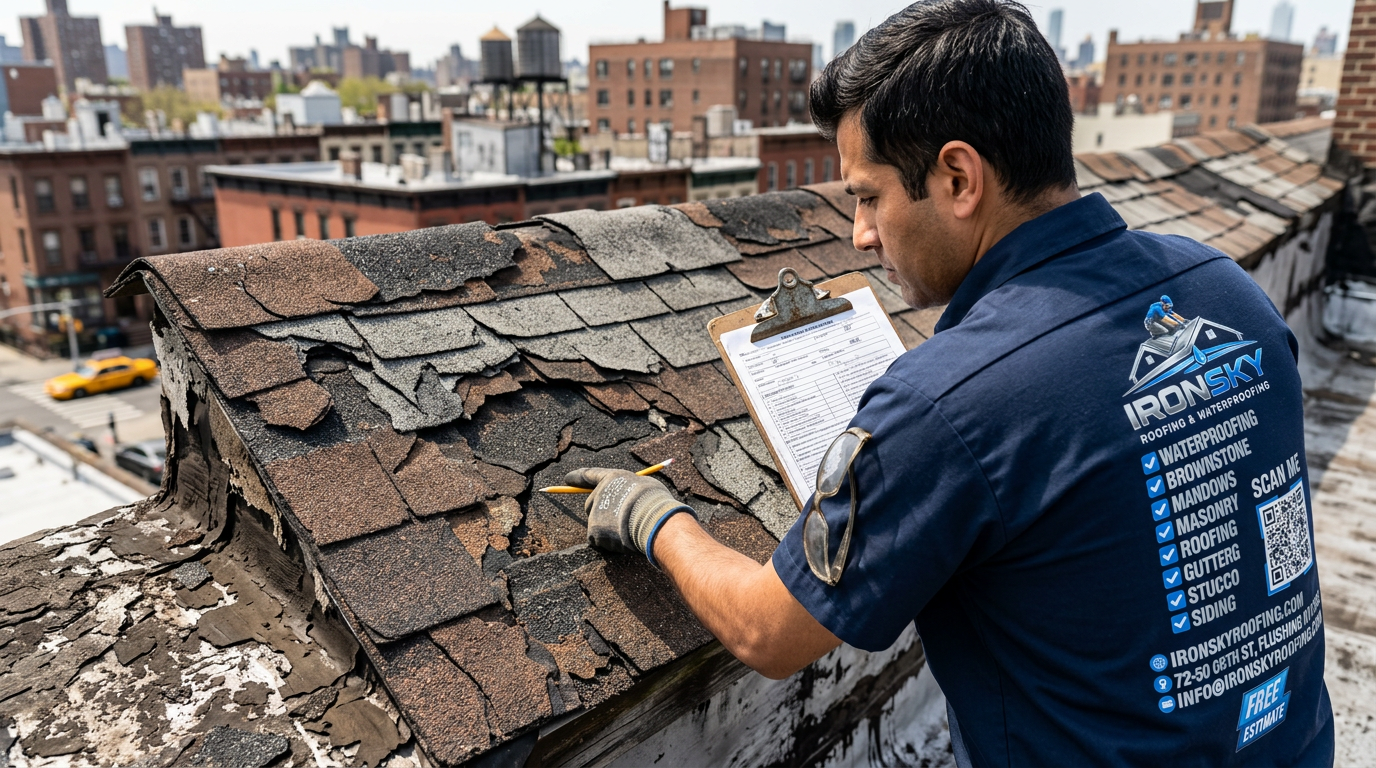
If your roof is showing three or more of these signs — or even just one of the structural ones, like sagging — schedule a professional inspection. A reputable NYC roofer should walk the roof, photograph everything, look inside the attic, and give you a written report with options. At IronSky we provide that inspection free of charge, with no pressure to commit. Catching the problem early almost always saves money, and at minimum gives you the information to plan the replacement on your timeline rather than during a thunderstorm in July.
One last note: we strongly recommend booking inspections in spring or fall. Summer and winter are emergency seasons in the NYC roofing world, and reputable contractors are booked out for weeks. A quiet October inspection means you'll have estimates in hand and a slot reserved before the next bad storm rolls through.
Get a Free Flat Roof Estimate
Licensed NYC roofers. Written, itemized quote. We respond within the hour during business hours.
- GAF Certified & Firestone Licensed
- Fully licensed & insured in NY State
- Free written estimate — no pressure
- Serving all 5 boroughs since 2008
Need a roofer in NYC?
IronSky offers free estimates and 24/7 emergency service across NYC, Long Island and Yonkers.
Get Free EstimateRelated Articles
All posts
Flat roof replacement in NYC costs $8,000–$25,000+. Learn what affects pricing, TPO vs EPDM costs, and how to get the best quote from a licensed NYC roofer.
A side-by-side comparison of the two most popular flat roof systems in NYC.
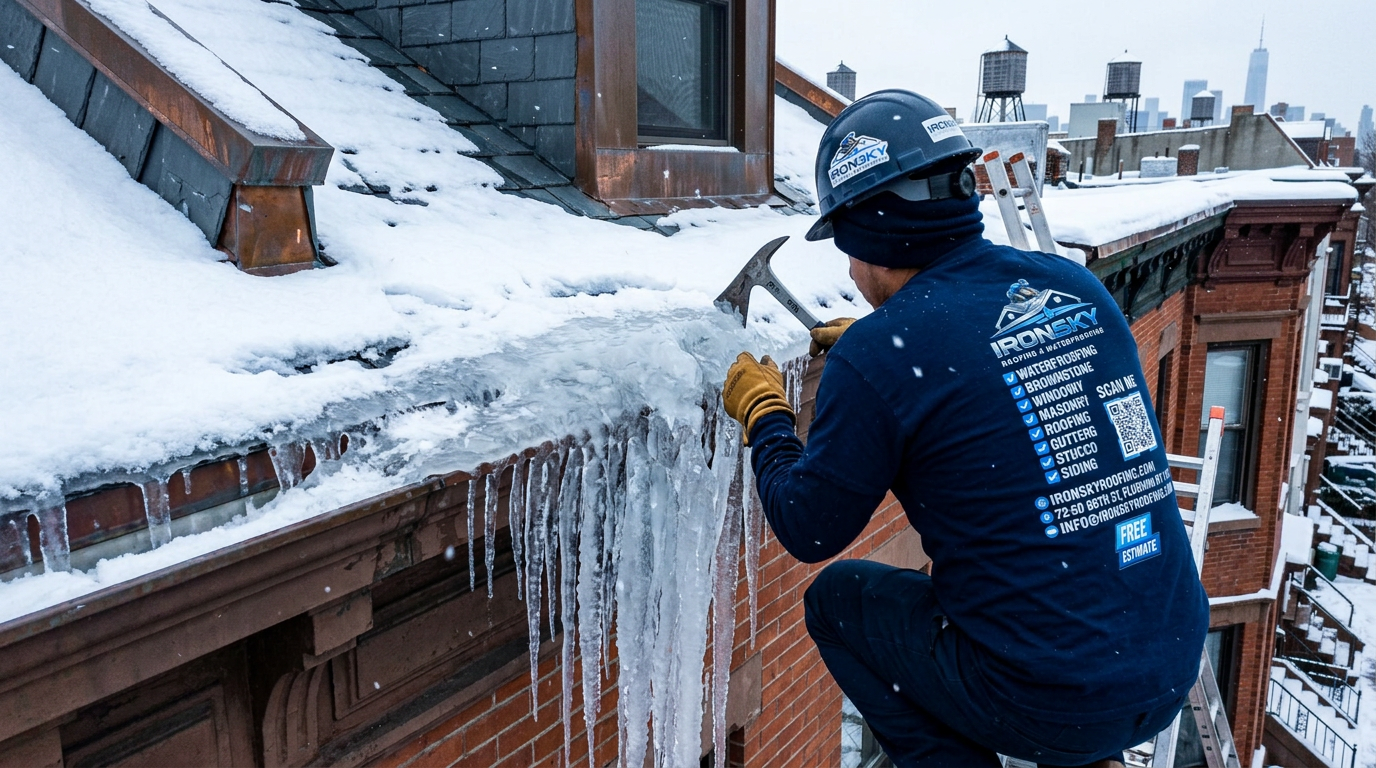
Pre-winter roof checklist to prevent ice dams, leaks and parapet failures.