Energy-Efficient Roof Coatings That Cut Con Ed Bills
If you own a building with a flat or low-slope roof in NYC, your rooftop is doing one of two things during the summer: reflecting sunlight back into the sky, or absorbing it and radiating it into your top-floor units and HVAC systems. The difference between those two scenarios shows up directly on your Con Ed bill, on your tenant comfort complaints, and on the lifespan of your roof itself.
Reflective roof coatings are one of the highest-ROI investments available for owners of aging but still serviceable flat roofs. This guide explains how they actually work, who is a good candidate, and what to expect from a properly executed coating project.
How reflective coatings work
Standard dark roofing materials — black EPDM, asphalt-based modified bitumen, gravel-ballasted built-up roofs — absorb 80-95% of the solar radiation that hits them. On a 95-degree summer day in NYC, those rooftops can hit surface temperatures of 160-180°F. That heat doesn't just sit there. It radiates downward into the building below, drives up cooling loads, and accelerates the breakdown of the roof membrane itself.
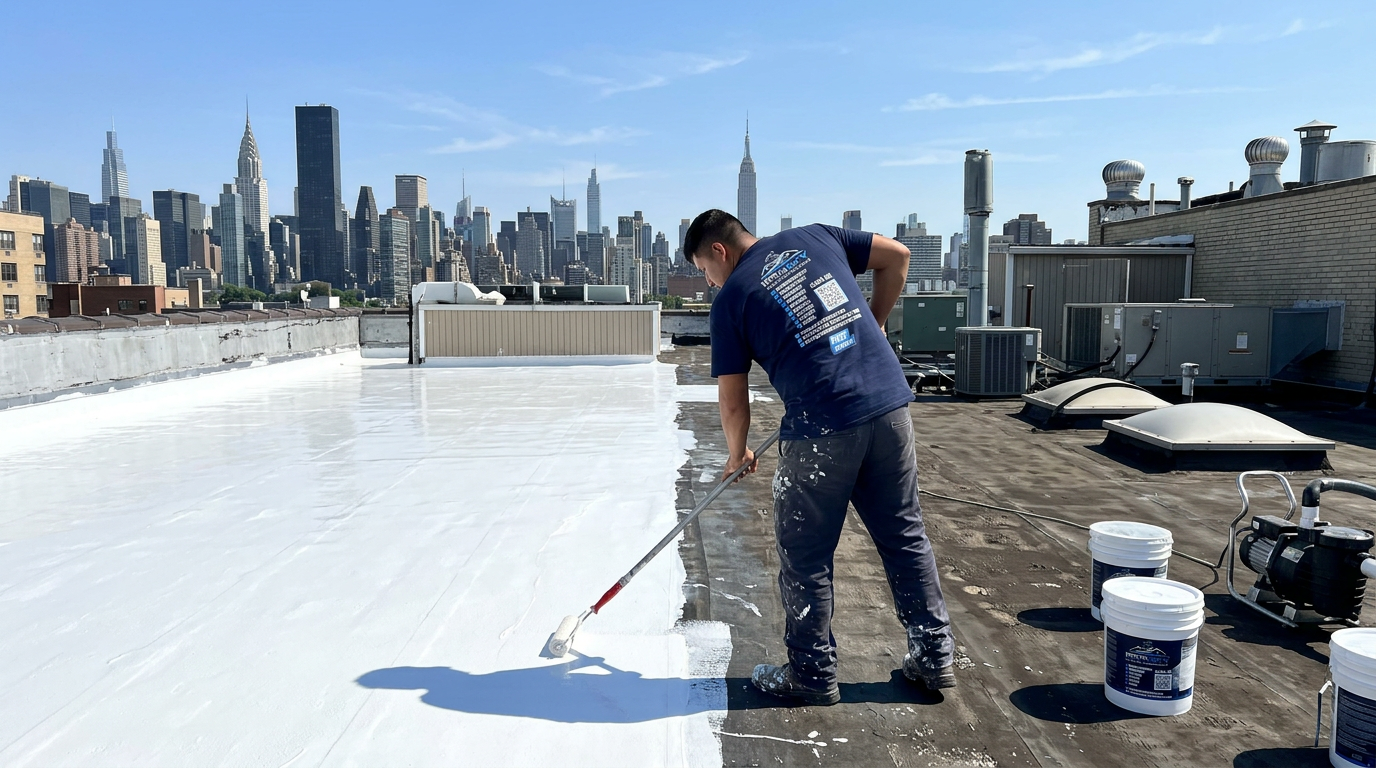
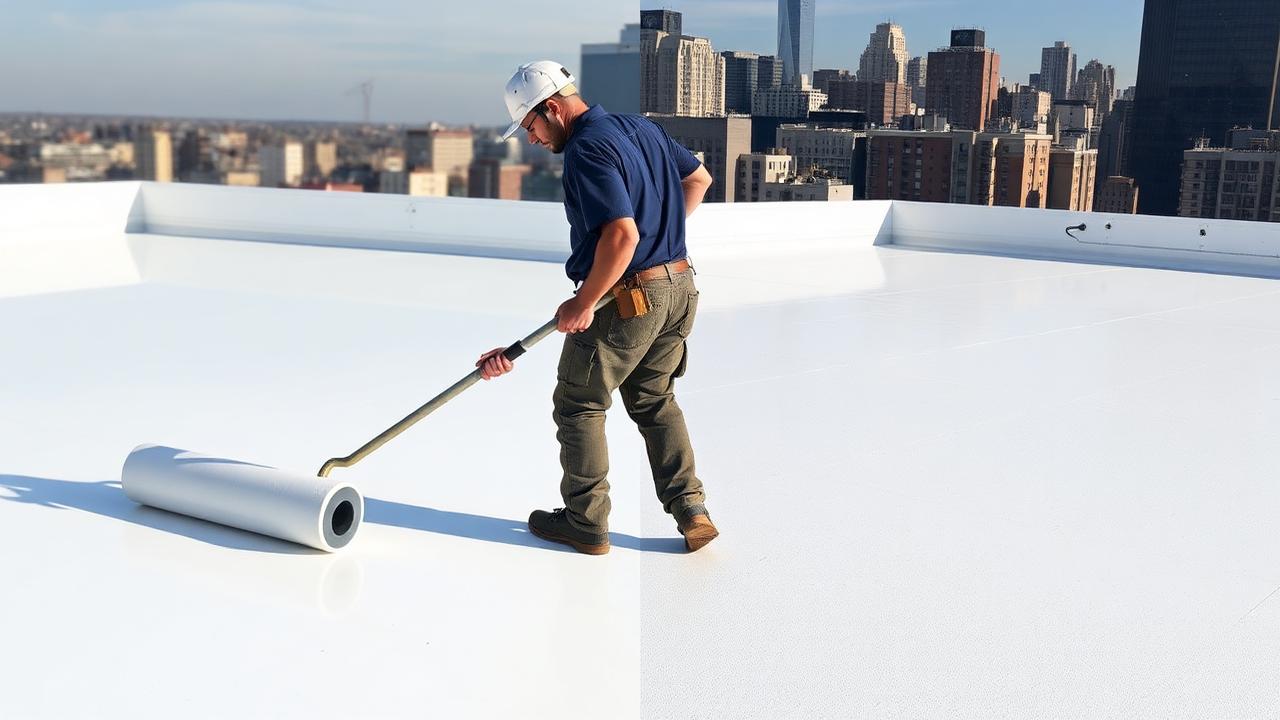
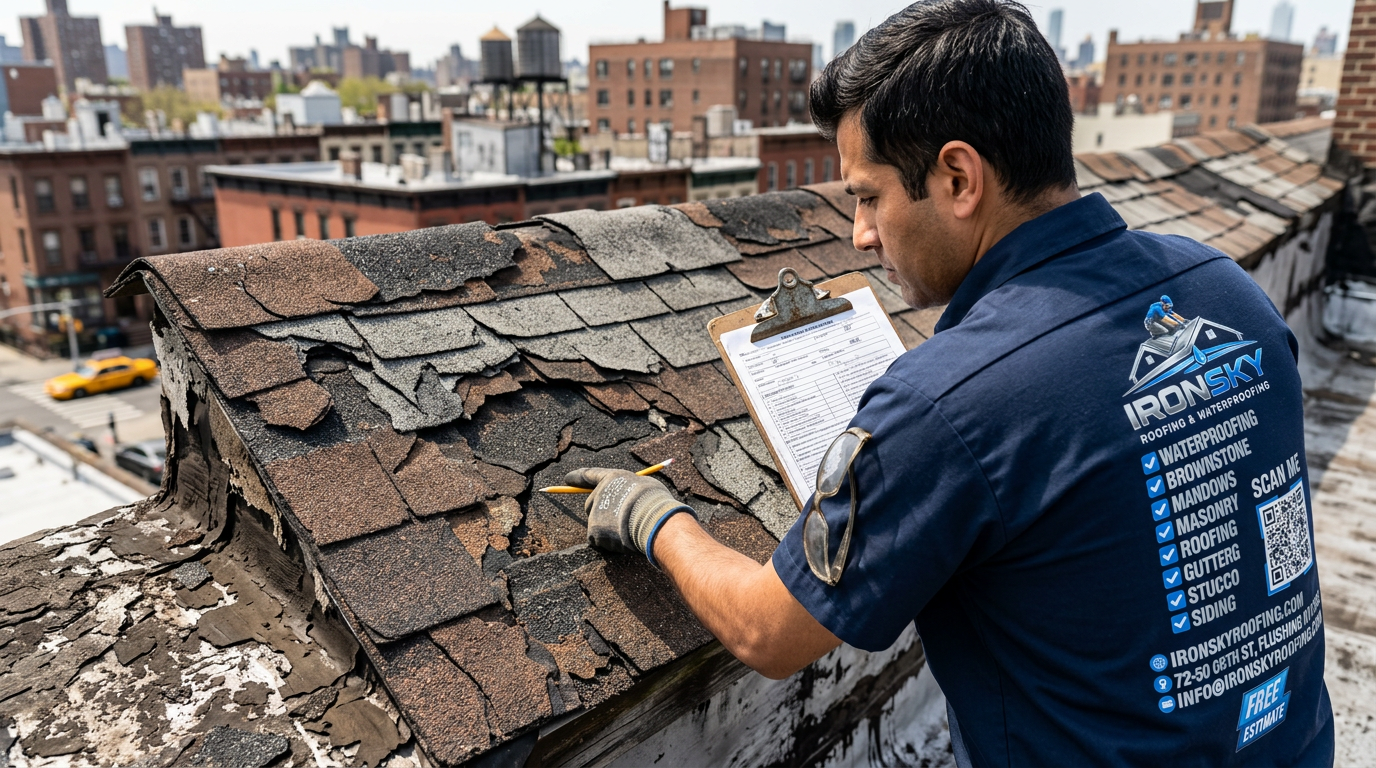
A reflective coating — typically white or light gray — bounces 70-85% of that solar radiation back into the atmosphere. Surface temperatures drop by 50-70°F. The roof membrane stays cooler, lasts longer, and the building below stays much more comfortable. The image below shows what application looks like in the field — a roller-applied elastomeric coating going down on a NYC commercial roof.
Who is a good candidate
Reflective coatings work best on flat or low-slope roofs that are aging but still structurally sound. Specifically, the best candidates are:
Who is not a good candidate
A coating is not a cure for a failing roof. If the existing membrane is widely cracked, the seams are open, the insulation below is wet, or there is structural ponding, a coating will only mask the problems for a season or two before failing along with the roof.
We always inspect the existing roof first. If it's not a good candidate for coating, we say so, and we'll tell you whether spot repairs or full replacement is the more cost-effective path.
Types of coatings
Three families of coatings dominate the NYC market, each with different strengths.
Acrylic (water-based elastomeric)
The most common and least expensive option. Good reflectivity, decent flexibility, easy application. Lifespan is typically 5-10 years before recoating. Best for tight budgets or when paired with NYC °CoolRoofs program incentives.
Silicone
More expensive but holds up much better in ponding water and UV exposure. Lifespan of 10-20 years is realistic. Best for roofs with minor ponding issues or harsh sun exposure.
Polyurethane
Excellent durability and impact resistance. Often used on roofs with high foot traffic or mechanical equipment. More expensive and more complex application.
What proper installation includes
A coating is only as good as the prep work below it. A correctly executed coating project always includes a thorough power wash of the existing roof, repair of all seams and penetrations with compatible sealant or membrane, primer application where required by the coating manufacturer, two coats of the chosen coating system applied at the manufacturer's specified mil thickness, and reinforcement fabric at any high-stress areas.
Skipping the prep work is the single most common reason coating projects fail. A $6,000 coating on $500 worth of prep work is going to disappoint everyone.
Energy savings and ROI
Documented case studies on NYC buildings show summer cooling costs dropping 15-25% after a reflective coating. On a typical multifamily building, that often pays back the coating cost in 4-6 years through energy savings alone — before counting the extended roof life, the reduced HVAC equipment wear, and the tenant comfort benefits.
NYC °CoolRoofs program
The city offers free or heavily subsidized cool roof coatings for qualifying nonprofit, affordable housing, and small commercial buildings. The program has coated millions of square feet of NYC rooftops. If you might qualify, the program is worth investigating — it's one of the best deals in NYC building maintenance.
Bottom line
If your flat roof is in decent shape but the building runs hot in summer, a reflective coating is one of the best investments you can make. It extends the life of the roof, lowers your energy bills immediately, makes your tenants more comfortable, and contributes to lowering NYC's urban heat island effect. Just be honest about whether your roof is actually a candidate — a coating cannot save a roof that's already failed.
Get a Free Flat Roof Estimate
Licensed NYC roofers. Written, itemized quote. We respond within the hour during business hours.
- GAF Certified & Firestone Licensed
- Fully licensed & insured in NY State
- Free written estimate — no pressure
- Serving all 5 boroughs since 2008
Need a roofer in NYC?
IronSky offers free estimates and 24/7 emergency service across NYC, Long Island and Yonkers.
Get Free EstimateRelated Articles
All posts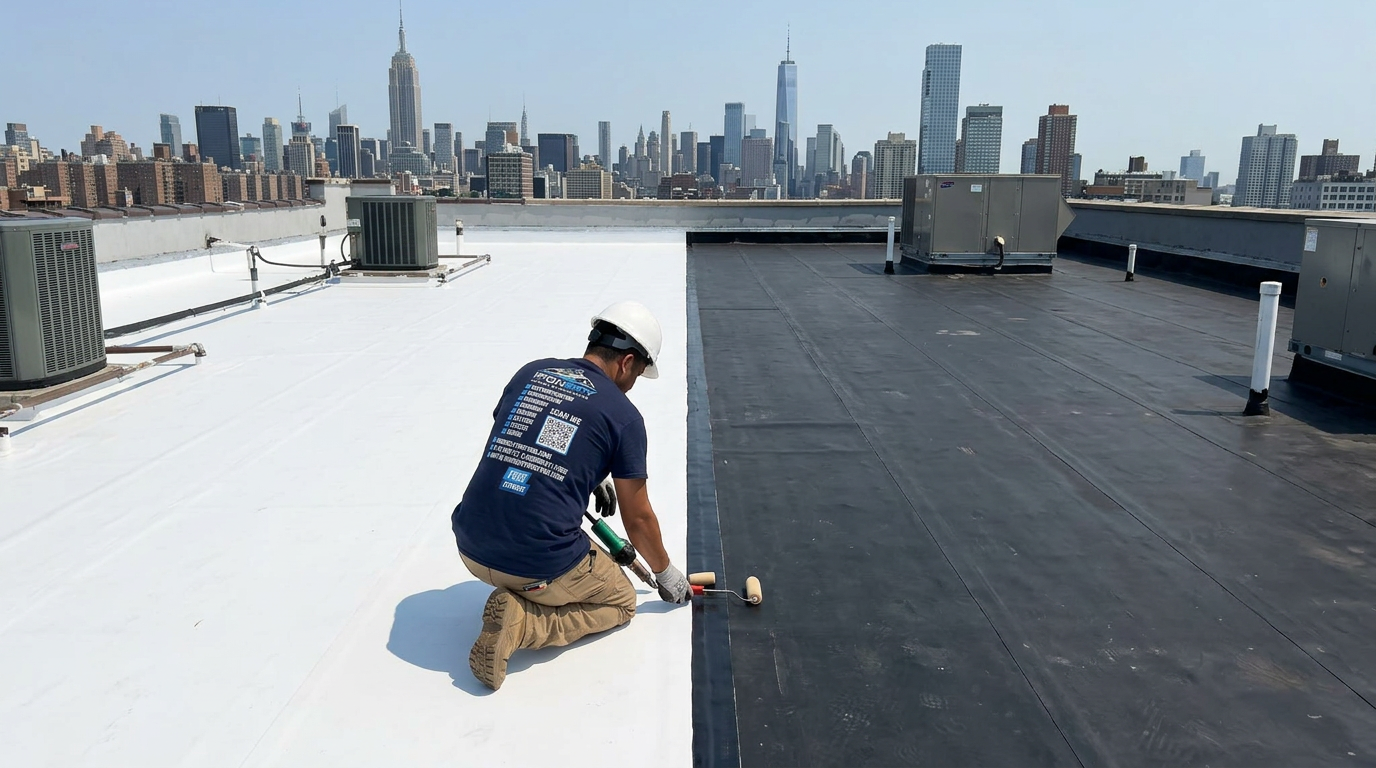
Flat roof replacement in NYC costs $8,000–$25,000+. Learn what affects pricing, TPO vs EPDM costs, and how to get the best quote from a licensed NYC roofer.
From curling shingles to ceiling stains, here are the warning signs every NYC homeowner should know.
A side-by-side comparison of the two most popular flat roof systems in NYC.