Custom Iron Railings: A NYC Brownstone Owner's Guide
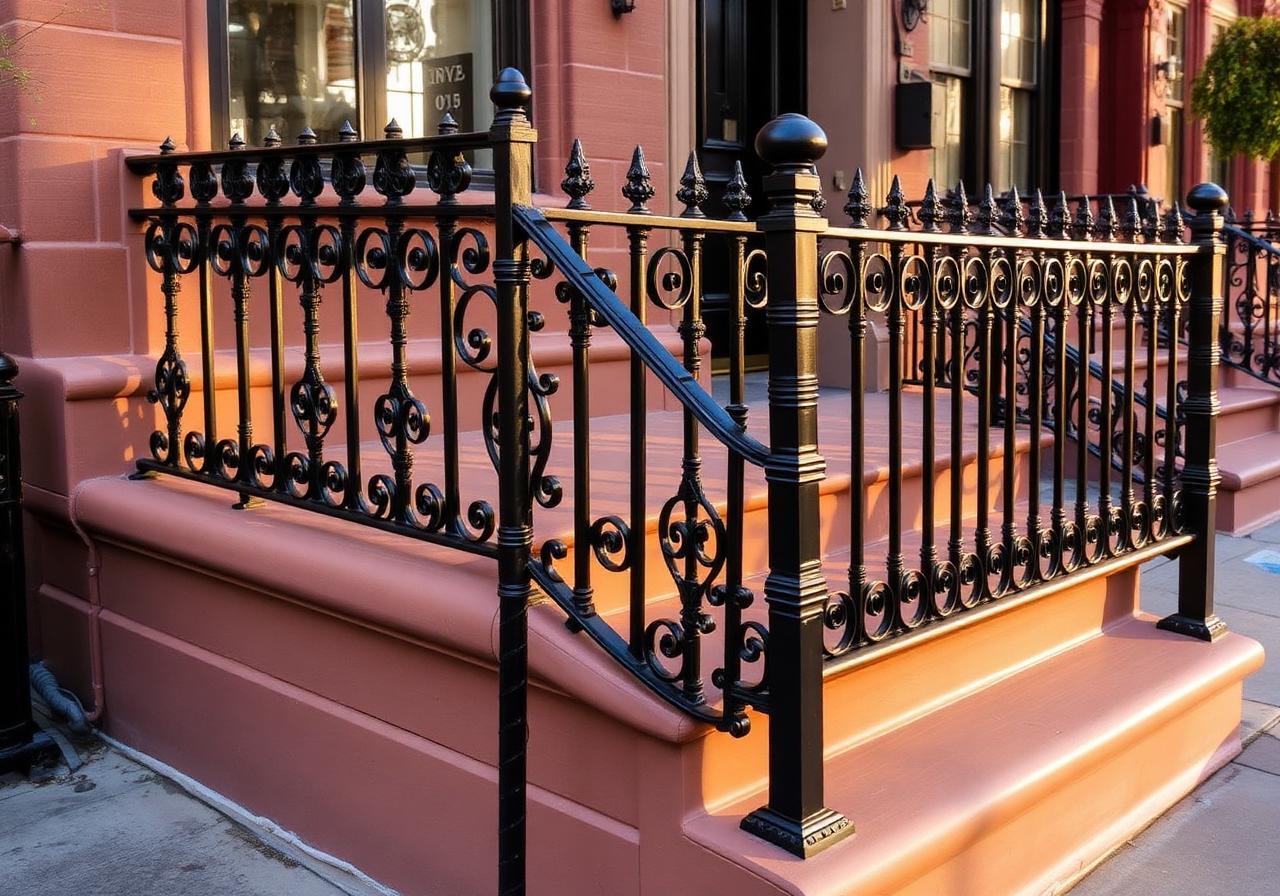
Walk down any brownstone block in Brooklyn Heights, Park Slope, Harlem or the Upper West Side and the first thing your eye catches isn't the brownstone itself — it's the iron. Stoop railings, fence panels, area-way gates, balcony rails: 19th-century NYC was a city of foundries, and the wrought-iron and cast-iron work that survived is one of the most distinctive architectural features in the country. When that iron starts to fail — and after 100+ NYC winters, it always does — replacing or restoring it the right way can completely transform the front of a house.
This guide walks through what we've learned installing and restoring custom iron railings on hundreds of NYC stoops. Whether you're dealing with a rusted-out 1890s rail, a code-violation modern install, or starting from scratch on a new build, the same principles apply.
Wrought iron, cast iron, or steel — what you actually have
Most NYC homeowners use 'wrought iron' as a generic term, but the iron on your stoop is almost certainly one of three things. Original 1880s–1920s railings are usually a mix of wrought iron (hand-forged scrolls and rails) and cast iron (decorative posts, finials, baluster details). Mid-century replacements are typically welded steel painted black to look like iron. Modern custom railings are almost always steel, because true wrought iron is no longer commercially produced in the US.
The distinction matters because the three materials repair differently. Cast iron is brittle and welds poorly — broken cast pieces are usually replaced rather than fixed. Wrought iron welds beautifully and can be re-forged. Steel is the easiest to fabricate but rusts faster than the originals if not primed correctly.
When repair makes sense, and when it doesn't
If 70% or more of the original ironwork is structurally sound, restoration is almost always cheaper and more historically appropriate than full replacement. We've saved 130-year-old railings that looked beyond hope by sandblasting to bare metal, repairing broken joints with matching profiles from a salvage yard, and refinishing with a proper rust-inhibiting primer and topcoat.
Replace when: posts are rusted through at the base where they meet stone, scrolls have lost more than half their cross-section to corrosion, the rail itself flexes when you push on it, or previous repairs have been welded so badly that the original profile is gone.
The right way to anchor a railing into bluestone
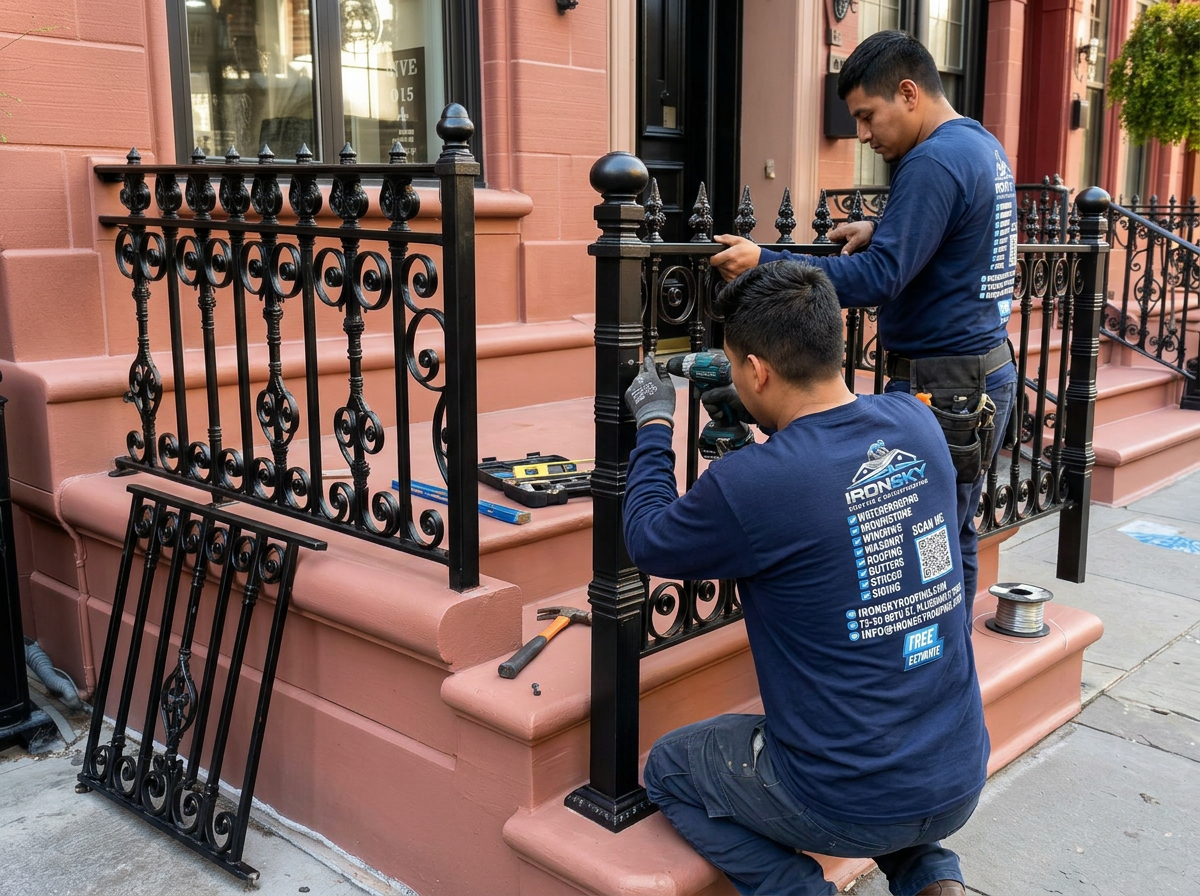
Half the railing failures we see have nothing to do with the iron itself — they're anchor failures. The original stoop was set into lead-caulked sockets cut into the stone. Modern installers often skip this and surface-mount with expansion bolts, which crack the stone after a few freeze-thaw cycles. The right modern equivalent is a stainless-steel anchor set in two-part epoxy, drilled to a depth of at least 4 inches, with a small bead of polyurethane sealant around the post base to keep water out.
Landmarks and historic district approval
If your home is in a NYC Landmark Preservation Commission district, exterior ironwork generally requires a permit before you replace it. The good news is that LPC has clear guidelines — match the original profile, scale, and finish — and approvals usually move quickly when the design is faithful. We provide drawings, profile samples and the LPC application paperwork as part of every brownstone railing project.
Powder coat versus paint
For new fabricated steel railings, modern powder coating outlasts paint by a decade or more. We powder-coat in our shop in a textured satin black that closely matches original 19th-century finishes. For restored original ironwork in landmark districts, traditional oil-based primer and topcoat is sometimes specified instead, because it can be touched up in place.
What it costs
Repair of an existing brownstone stoop railing typically runs $1,800–$4,500 depending on length and condition. A full custom replacement with code-compliant 4-inch baluster spacing, decorative scrolls and powder-coat finish runs $3,500–$9,000 for a standard NYC stoop. Larger projects (full areaway, balcony, fire escape replacement) scale from there.
Whatever you do, get the work done by someone who has actually fabricated and installed iron railings in NYC, not a general contractor sourcing from a big-box catalog. The difference shows from across the street, and it shows in how long the railing lasts.
Get a Free Flat Roof Estimate
Licensed NYC roofers. Written, itemized quote. We respond within the hour during business hours.
- GAF Certified & Firestone Licensed
- Fully licensed & insured in NY State
- Free written estimate — no pressure
- Serving all 5 boroughs since 2008
Need a roofer in NYC?
IronSky offers free estimates and 24/7 emergency service across NYC, Long Island and Yonkers.
Get Free EstimateRelated Articles
All posts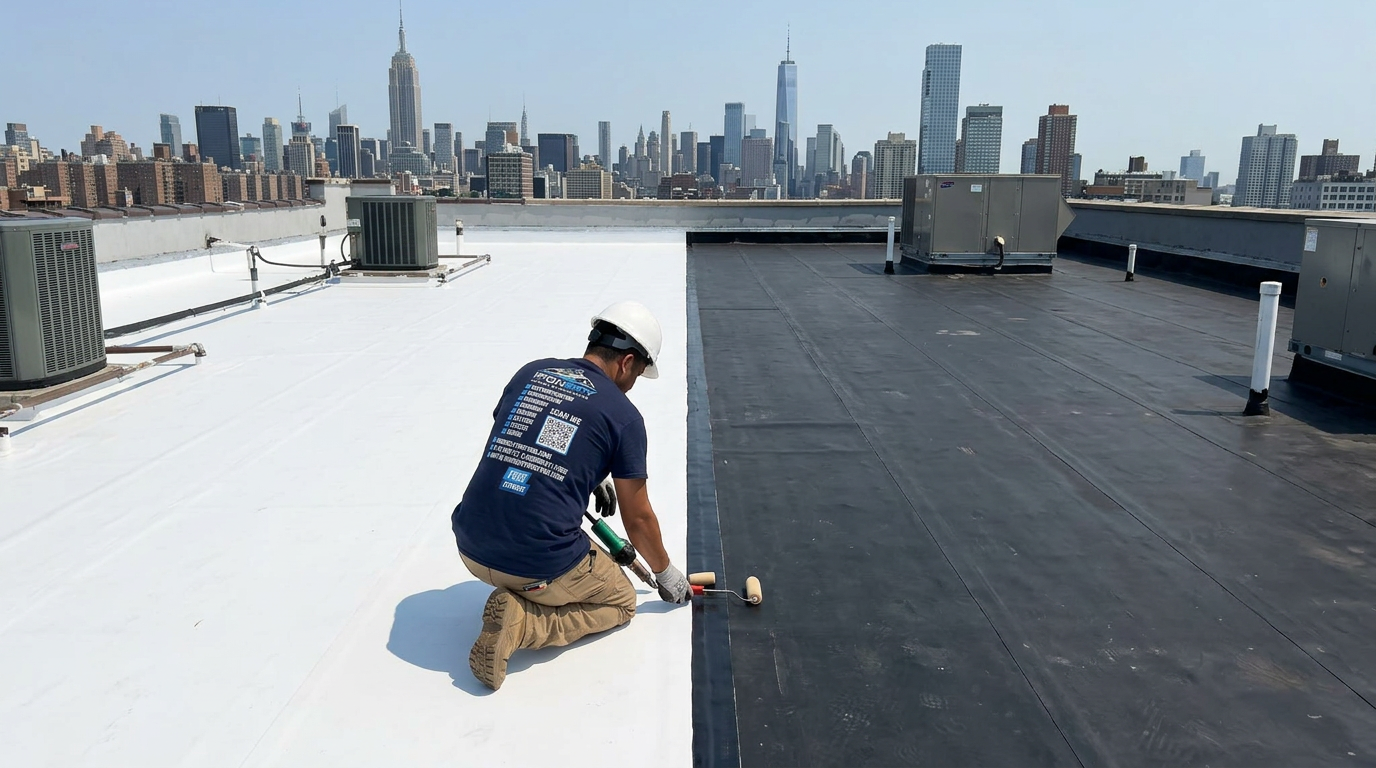
Flat roof replacement in NYC costs $8,000–$25,000+. Learn what affects pricing, TPO vs EPDM costs, and how to get the best quote from a licensed NYC roofer.
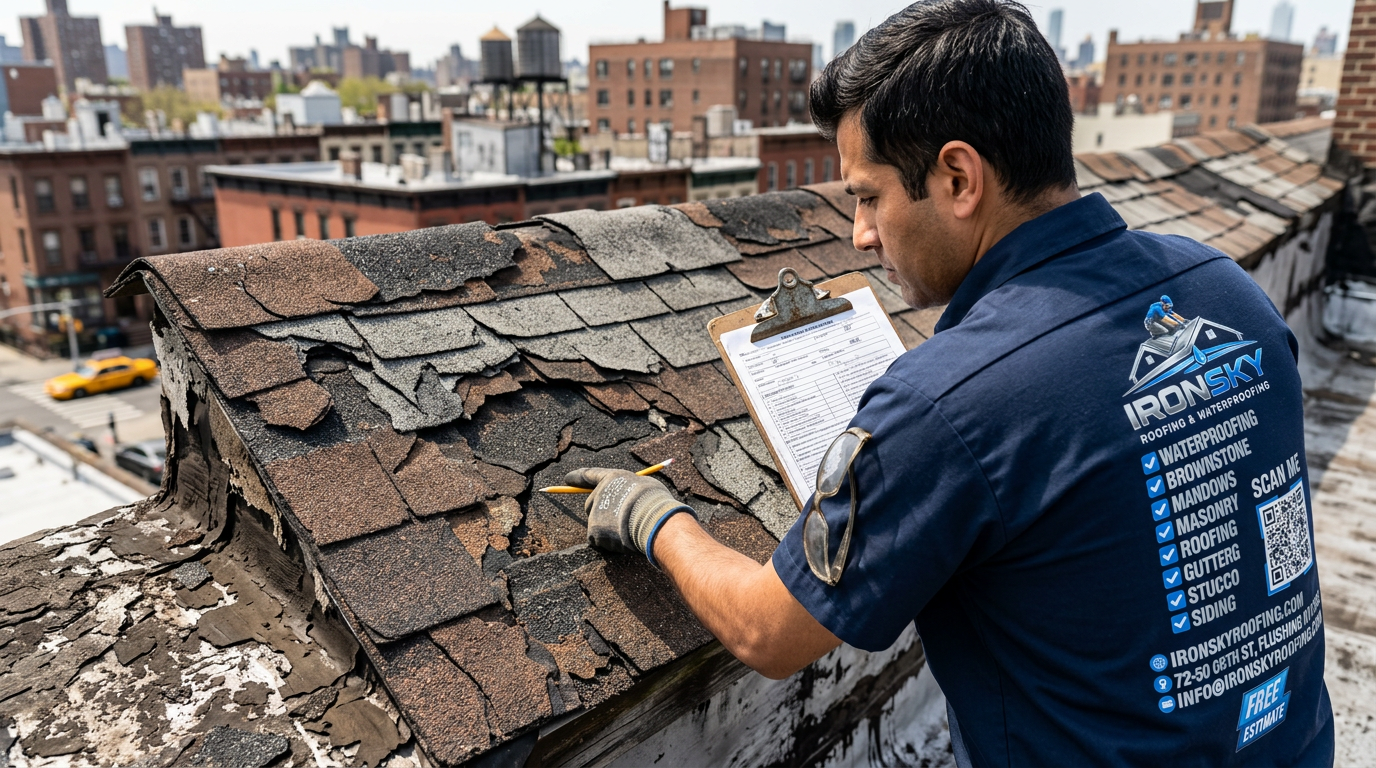
From curling shingles to ceiling stains, here are the warning signs every NYC homeowner should know.
A side-by-side comparison of the two most popular flat roof systems in NYC.